
In this guide
This guide is a map, not a substitute for a return-preparation manual. It shows how the major Canadian business-tax responsibilities fit together and where operational failures usually begin. For a deeper inventory of corporate obligations, continue to the corporate tax obligations guide.
From guidance to operating record
Run tax work from one connected record
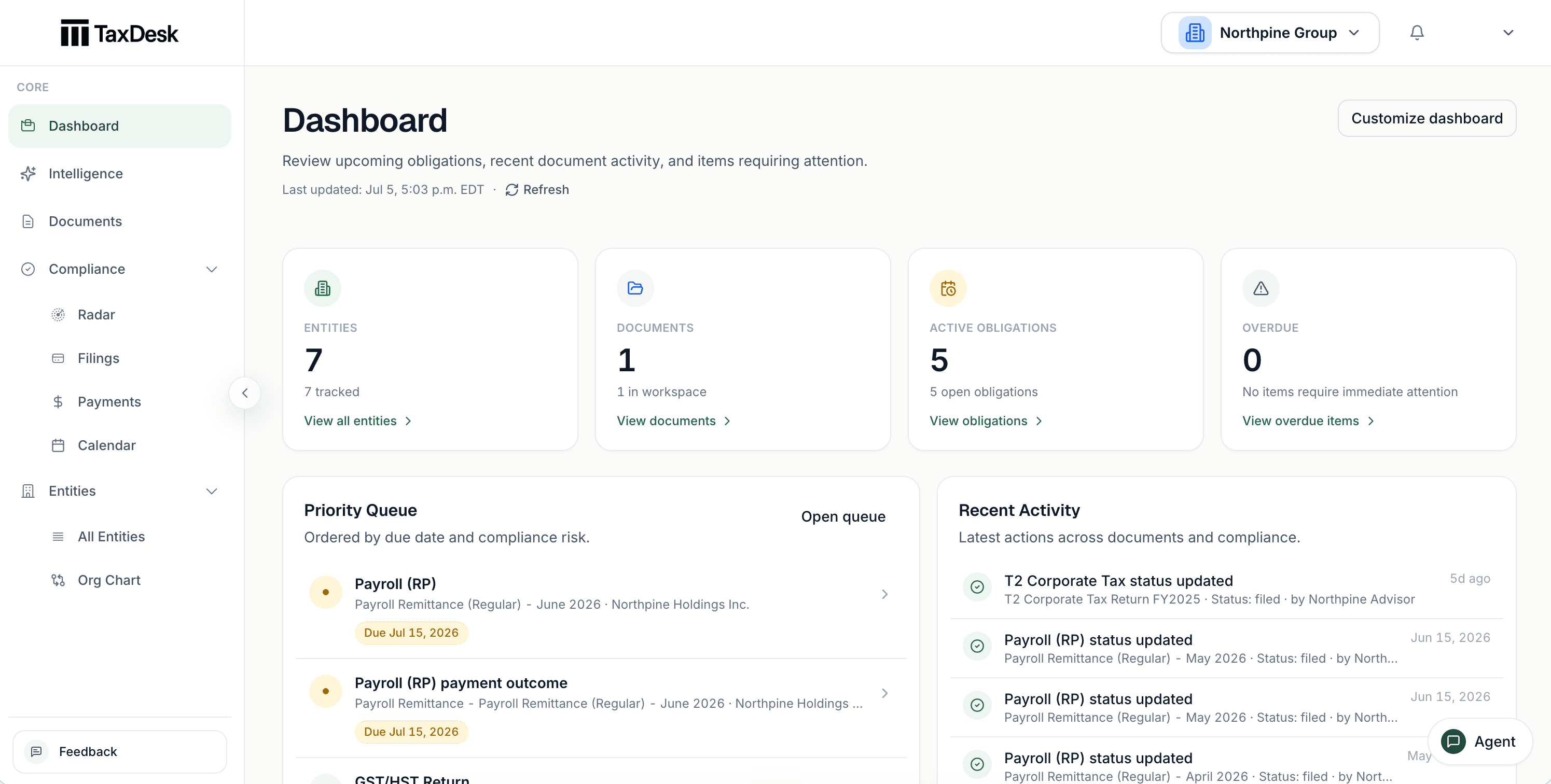
TaxDesk keeps entities, tax-program registrations, obligations and supporting documents together so the team can see what applies, what is due and what backs it up.
- Entity profiles hold the facts that determine what applies
- Tax-program settings generate concrete filing obligations
- Documents and status history stay connected to the work
1. Start with the taxpayer, not the tax form
The first question is not “which return do we file?” It is “which legal person earned the income, employed the worker, made the sale or entered the transaction?” A sole proprietor, corporation, partnership and trust can participate in the same business group while remaining different taxpayers with different reporting responsibilities.
That distinction also prevents a common multi-entity error: completing the right task for the wrong company. The legal name, entity type, jurisdiction, fiscal year-end and status should be settled before anyone creates a compliance calendar.
2. Map each CRA tax program
A business number is the root identifier; its program identifiers show which taxes the organization handles with the CRA. A corporation may be registered for RC corporate income tax, RT GST/HST, RP payroll, or other programs based on its activity. Related companies often have different combinations, even when they share owners and advisors.
3. Corporate income tax is more than a rate
Canadian corporations generally file a T2 for each tax year. The tax calculation can combine federal and provincial or territorial rules, and the result depends on factors such as corporate status, income type, jurisdiction, association with other corporations and access to deductions or credits.
A static table is a poor control because rates and eligibility do not tell the whole story. Use the current corporate rate reference and corporate tax calculator for estimates, then confirm the actual filing position through the return-preparation process.
4. GST/HST follows supplies, accounts and reporting periods
GST/HST work starts with registration status and the nature and location of supplies—not simply the province where the business is incorporated. Once registered, the business must charge tax when required, support input tax credits, file for every reporting period and remit net tax by the applicable date, including nil periods where required.
Registration thresholds, place-of-supply questions, zero-rated versus exempt activity and evidence for input tax credits deserve their own review. See the practical GST/HST operating guide.
5. Payroll is a trust-account workflow
Employers must determine who is an employee, calculate required source deductions, remit based on the assigned remitter type, and report the year through the appropriate slips and summaries. The rates are only one input; worker classification, taxable benefits, pay dates, remittance frequency and corrections can all change the work.
Use the CPP/EI calculator for current contribution estimates. Keep payroll calculations, remittance confirmations, account statements and filed slips as one traceable record rather than separate exports.
6. Filing, payment and instalment dates are different controls
A return can be filed on time while its balance is late, and a payment can be made while the return remains outstanding. Corporations generally file a T2 within six months of year-end, but balance-due timing and instalment frequency depend on conditions. GST/HST and payroll dates follow their own reporting periods and remitter settings.
Calculate entity-specific dates with the tax deadlines tool, then confirm them against CRA records and current guidance.
7. The evidence is part of the obligation
A filed return is an output. The defensible record also includes the source documents, calculations, elections, payment confirmations, CRA correspondence and review notes that explain it. Those records should be attached to the right entity and period while the work is happening, not reconstructed after a reassessment or advisor change.
8. Build a review rhythm, not an annual rescue project
The most reliable control is a recurring review of upcoming work, overdue items, unmatched notices, missing evidence and changes to entity facts. A weekly operational review catches ownership changes, new accounts, revised remitter types and incomplete filings while there is still time to respond. Annual tax preparation then becomes a continuation of an ongoing record rather than a reconstruction exercise.
Scope note. This guide is educational and operational. Rates, thresholds, due dates and tax treatment can change or depend on facts not covered here. Confirm a specific position with current CRA guidance and a qualified tax professional.
Primary reading
Official starting points used to develop and check this guide.
Continue the workflow
The next useful step
Put the guide into practice
Run tax work from one connected record
TaxDesk keeps entities, tax-program registrations, obligations and supporting documents together so the team can see what applies, what is due and what backs it up.